

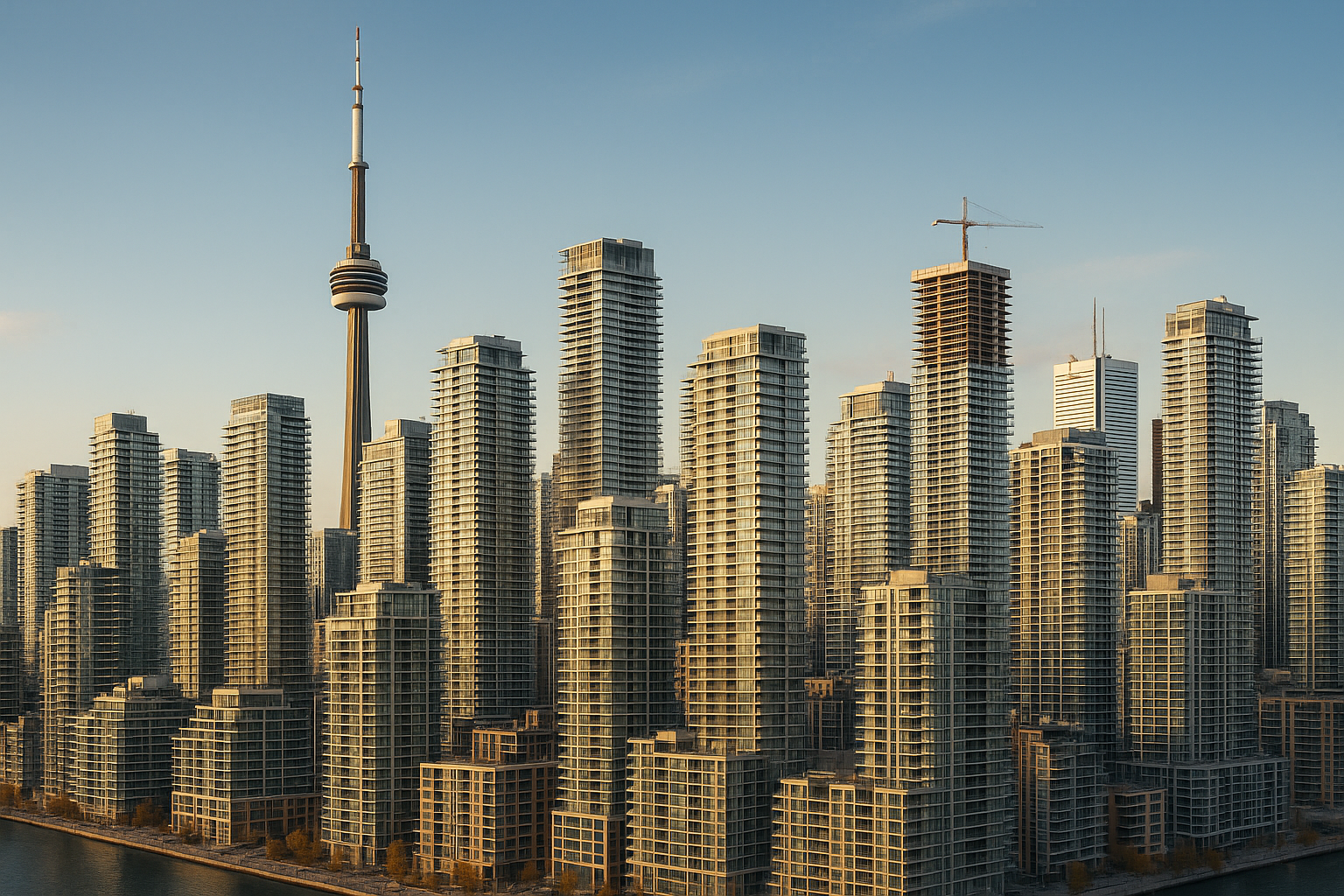
The Greater Toronto Area (GTA) continues to experience rapid population growth in 2025, fueled largely by record levels of immigration and sustained urbanization. As Canada’s economic engine, the GTA remains an attractive destination for newcomers seeking employment, education, and a high standard of living. In fact, recent government data indicates that Ontario received the highest share of Canada’s 500,000 new permanent residents in 2024, with a significant concentration settling in the Toronto region.
Several factors are driving this demographic trend:
- Federal Immigration Targets: Canada’s ambitious immigration plans, which aim to bring in over 485,000 newcomers annually through 2026, are directly contributing to the GTA’s growing population. Toronto, Vaughan, Mississauga, and Brampton are among the top destinations for new Canadians, intensifying the need for both rental and ownership housing.
- Urbanization and Economic Opportunities: The GTA’s diversified economy — spanning finance, technology, healthcare, education, and manufacturing — continues to attract individuals and families from across Canada and internationally. The availability of job opportunities, world-class universities, and healthcare facilities makes the region a magnet for population growth.
- Household Formation Trends: As younger immigrants and Canadian-born millennials enter the workforce and seek independence, there is a surge in household formation. This drives demand not just for high-rise condominiums but also for townhouses and single-family homes, further straining an already tight housing market.
The result of this continuous influx is a deepening imbalance between housing supply and demand. Despite new housing starts and government promises to build more homes, construction simply cannot keep pace with the number of new residents entering the market each year. This has several notable consequences:
- Upward Pressure on Home Prices: Even with recent interest rate cuts, limited supply against high demand keeps both home prices and rents elevated across much of the GTA.
- Increased Competition for Rentals: Rental vacancy rates in the GTA remain among the lowest in Canada, putting additional financial pressure on tenants and reducing mobility within the housing market.
- Suburban and Exurban Growth: As housing costs in central Toronto continue to rise, more people are moving to outer suburbs and exurban areas such as Durham, Halton, and even as far as Waterloo Region, driving regional urban sprawl.
To address these challenges, policymakers are increasingly emphasizing the need for accelerated development timelines, densification strategies near transit hubs, and reforms to zoning laws that allow for more multi-family dwellings. However, industry experts warn that unless housing supply meaningfully increases, affordability will remain a persistent and worsening issue in the GTA.
In Summary, population growth is not just a background factor — it is a dominant force shaping the future of real estate in the GTA. For real estate professionals, investors, and policymakers alike, understanding the depth and trajectory of this demographic wave is essential for strategic planning in 2025 and beyond.
Key Takeaway
As immigration and urbanization accelerate, the GTA’s population growth continues to fuel an urgent and ongoing demand for housing. Without a coordinated effort to dramatically increase the housing supply, affordability challenges will persist, reshaping where and how people live across the region. For real estate professionals, developers, investors, and policymakers, adapting to these shifting demographics is not optional — it is critical to long-term success in Toronto’s dynamic market.